


The False Mahatma: Reassessing Gandhi’s Legacy
The name "Mahatma Gandhi" evokes images of a peaceful revolutionary draped in khadi, holding a walking stick, and preaching nonviolence. To many, he is the face of India's independence, a global symbol of moral fortitude. Gandhi's image has been canonized into the fabric of the nation-state, occupying currency notes, statues, and moral discourse. Yet beneath the myth lies a more complex and troubling reality. While Gandhi's contributions to anti-colonial resistance are undeniable, his record on race, caste, and gender relations demands critical scrutiny.
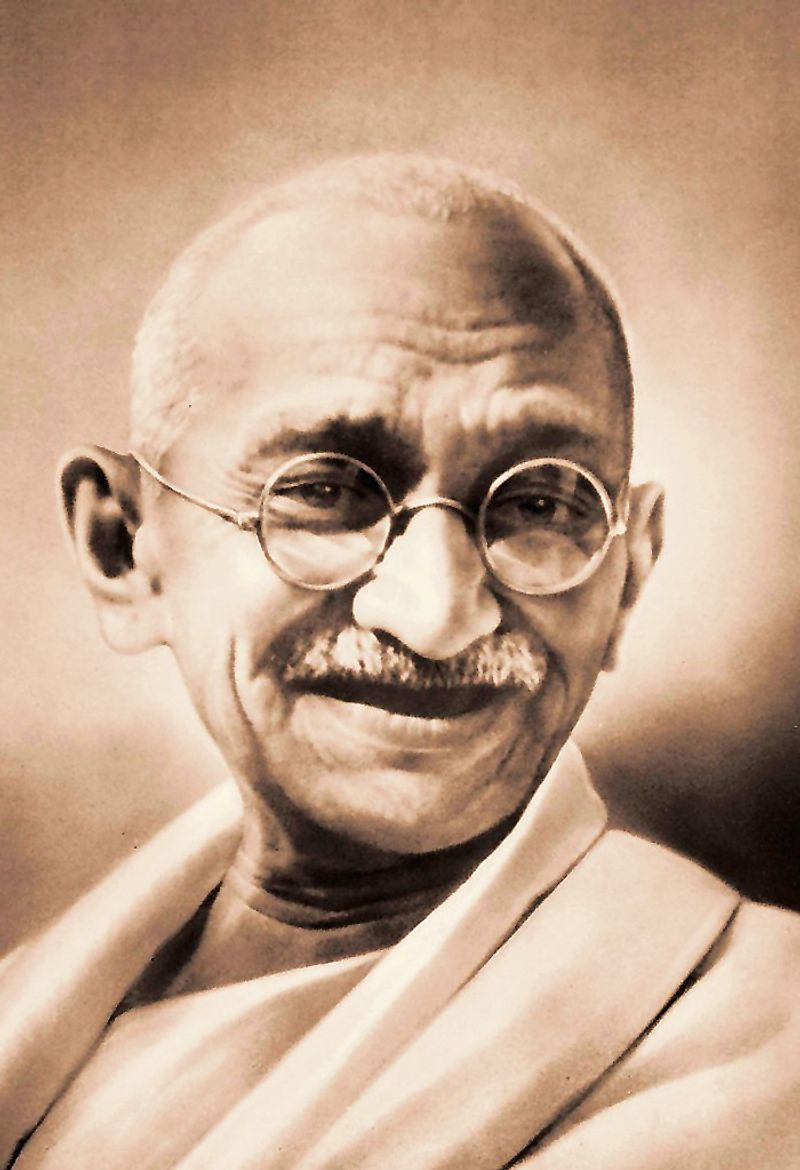
This essay contends that Gandhi's legacy has been whitewashed through deliberate political and cultural processes that sanitize his problematic beliefs and contradictions. Far from being a universal moral beacon, Gandhi actively espoused racist and colorist views, particularly during his time in South Africa. His advocacy for Indian rights was not grounded in solidarity with other oppressed peoples, but in preserving Indian social hierarchies. The construction of the Mahatma was not an organic evolution but a strategic fabrication—engineered by colonial administrators, nationalist elites, and postcolonial mythmakers.
Understanding Gandhi's role in shaping modern India requires unpacking the historical processes and ideological scaffolding that allowed his contradictions to be recast as virtues. We must ask why his racism, casteism, and gender conservatism are consistently overlooked, even by his admirers. This is not an act of erasure but an ethical obligation to the truth.
What follows is a critical reassessment that challenges the sanitized narrative and urges a confrontation with the full spectrum of Gandhi’s political and personal life. If we fail to interrogate this history, we continue to uphold a myth that masks oppression under the guise of moral purity.
Historical Context: Gandhi in South Africa
Gandhi's formative years as a political activist were not in India but in South Africa between 1893 and 1914. It was here that his racial ideology was most visible and least filtered. In English writings intended for the colonial administration, Gandhi presented Indians as civilized and distinguished them sharply from Black Africans, whom he characterized as uncultured and primitive. In contrast, his writings in Gujarati newspapers such as Indian Opinion reveal an even starker disdain for Africans, describing them with derogatory terms and urging Indians to avoid social mixing.

In a letter to the Natal Legislative Assembly in 1893, Gandhi protested against the Indian population being housed in the same jail cells as Black Africans, calling it an affront to Indian dignity. He referred to Black South Africans as kaffirs, a deeply offensive term, and argued for Indian inclusion in the colonial social order—not out of opposition to apartheid but to claim Indians were racially superior to native Africans. Gandhi’s protests were against being treated like Africans, not against the logic of racial separation itself.
Excerpts from letters written by Gandhi in South Africa
In 1893, Gandhi wrote to the Natal parliament saying that a general belief seems to prevail in the Colony that the Indians are a little better, if at all, than savages or the Natives of Africa.
In 1904, he wrote to a health officer in Johannesburg that the council must withdraw Kaffirs from an unsanitary slum called the Coolie Location where a large number of Africans lived alongside Indians. About the mixing of the Kaffirs with the Indians, I must confess I feel most strongly. The same year he wrote that unlike the African, the Indian had no war-dances, nor does he drink Kaffir beer.
When Durban was hit by a plague in 1905, Gandhi wrote that the problem would persist as long as Indians and Africans were being herded together indiscriminately at the hospital.
Gandhi's alignment with the colonial regime in reinforcing apartheid structures speaks volumes about the limitations of his moral framework. His defense of Indian interests was couched in language that upheld white supremacy, making him an unreliable ally for anti-racist struggles. This foundational racism never fully left his political outlook.
Gandhi’s Colorism and Caste Views
The caste system of Hinduism began as Varnashrama dharma or chaturvarna. Today, we have around 4000 castes and sub-castes (jathis), packaged into 4 varnas, namely— Brahmin (priest caste), Kshatriya (warrior caste), Vaishya (merchant caste) and Shudra (servant caste).
"Outside of these varnas are the avarna castes, the Ati-Shudras, subhumans, arranged in hierarchies of their own—the Untouchables, the Unseeables, the Unapproachables—whose presence, whose touch, whose very shadow is considered to be polluting by privileged-caste Hindus." — Dr. Arundhati Roy
Back in India, Gandhi's rhetoric shifted but his hierarchies remained intact. While he professed support for the so-called Harijans, his language and actions perpetuated caste-based paternalism. He opposed the use of the term Dalit, preferring the patronizing children of God, which erased the political edge of anti-caste struggles. Gandhi also resisted Dr. B.R. Ambedkar's demands for separate electorates for Dalits, seeing them as a threat to Hindu unity. His infamous fast unto death was an emotional blackmail tactic to maintain upper-caste hegemony.

"Untouchables were not allowed to use the public roads that privileged castes used, they were not allowed to drink from common wells, they were not allowed into Hindu temples, they were not allowed into privileged-caste schools, they were not permitted to cover their upper bodies, they were only allowed to wear certain kinds of clothes and certain kinds of jewellery. Some castes, like the Mahars, the caste to which Ambedkar belonged, had to tie brooms to their waists to sweep away their polluted footprints; others had to hang spittoons around their necks to collect their polluted saliva. Men of the privileged castes had undisputed rights over the bodies of Untouchable women. Love is polluting. Rape is pure."— Dr. Arundhati Roy
Colorism was deeply embedded in Gandhi’s worldview. He once wrote that Indians are not as black as Kaffirs and considered fair skin to be closer to spiritual and moral cleanliness. His discomfort with darker skin tones was evident in his reactions to caste intermingling and personal habits around hygiene and clothing, which implicitly upheld Brahminical notions of purity.
Even within his ashrams, where equality was supposedly practiced, caste distinctions were maintained. Dalits were often relegated to sanitation tasks and kept at symbolic and practical distance. His vision for social harmony never included dismantling the caste system; instead, he aimed to soften its cruelty without challenging its core.
Excerpts from Caste debates between Ambedkar and Gandhi
Ambedkar— There cannot be a more degrading system of social organization than the caste system. It is the system that deadens, paralyses and cripples the people from helpful activity.
Gandhi— I believe that if Hindu society has been able to stand, it is because it is founded on the caste system… To destroy the caste system and adopt the western European social system means that Hindus must give up the principle of hereditary occupation which is the soul of the caste system. Hereditary principle is an eternal principle. To change it is to create disorder. I have no use for a Brahmin if I cannot call him a Brahmin for my life. It will be chaos if every day a Brahmin is changed into a Shudra and a Shudra is to be changed into a Brahmin.
Gandhi's outlook on equality was that all individuals should be brought under the varna system, and that included the avarna castes or the ati-shudras (Untouchables).
Ambedkar— The outcaste is a by-product of the caste system. There will be outcastes as long as there are castes. Nothing can emancipate the outcaste except the destruction of the caste system.
In Gandhi's moral framework, purity often equated with lightness (further interpreted as refinedness) of skin, of behavior, of speech. His opposition to inter-caste marriages and resistance to temple entry for Dalits in certain regions underscores his prejudices. These are not isolated incidents but reflections of a man deeply benefitting from the discriminatory caste hierarchies, he refused to dismantle.
His selective empathy and top-down approach to social reform did more to preserve the caste order than to upend it. By labeling Dalits as objects of pity rather than political equals, Gandhi further entrenched a hierarchy he claimed to transcend.
The Making of the “Mahatma” Myth
The elevation of Gandhi to near-divine status was not incidental. It was a carefully curated political project. British administrators found in Gandhi a useful moderate who could pacify revolutionary tendencies. Indian nationalist elites, particularly the Congress Party, projected Gandhi as the moral compass of the freedom movement to unify a fragmented populace. Western biographers like Louis Fischer and Romain Rolland contributed to this hagiography, portraying Gandhi as a saint rather than a shrewd political operator.

Public spectacles like the Salt March and the Dandi protest were less about spontaneous protest and more about media choreography. They were designed for global consumption, reinforcing the idea of a peaceful, barefoot sage facing an empire. Meanwhile, Gandhi's critics, especially those from marginalized communities, were dismissed or silenced in the name of unity.
The press played a pivotal role in constructing the Mahatma myth. Indian newspapers aligned with the Congress Party amplified Gandhi’s virtues while ignoring or rationalizing his regressive views. Western media, enchanted by the exoticism of a nonviolent freedom fighter, swallowed the narrative without scrutiny.
Post-independence governments institutionalized Gandhi’s image through school curricula, public holidays, and national currency. The hagiographic film “Gandhi” by Richard Attenborough crystallized this sanitized version for international audiences. In doing so, the Indian state and its allies in the West obscured Gandhi’s more troubling aspects to serve a nationalistic and spiritual agenda.
This myth-making did not just erase dissent, it weaponized morality. Those who criticized Gandhi were labeled divisive, while his moral failures were framed as personal quirks. The cost of this myth has been a history written in partial truths.
Political Pragmatism vs. Principles
Gandhi often cloaked political strategy in moral rhetoric, but his compromises reveal a willingness to sideline principle when it conflicted with power. His stance on the Poona Pact, which nullified separate electorates for Dalits, catered more to upper caste Hindus than to justice. Similarly, his engagements with British authorities were marked by a cautious diplomacy that often ignored the violence embedded in colonial rule, especially outside urban centers.
When faced with feminist critiques, Gandhi urged women to embrace chastity and domesticity as paths to empowerment. His discomfort with sexuality, contraception, and abortion painted a restrictive vision of liberation that served patriarchal structures. This moral rigidity was framed as spiritual discipline, but in practice, it reinforced gender hierarchies. Gandhi's approach to industrial labor was similarly fraught. While he supported textile workers in Ahmedabad, his ultimate preference was for self-sufficient villages rather than structural change. He opposed trade unionism and distrusted modern labor movements, fearing they might erode spiritual values.
In communal politics, Gandhi’s response to Hindu-Muslim tensions was often ambiguous. He would fast to stop violence but avoided deeper interrogation of Hindu nationalism. His silence or moral equivalence in moments of pogroms reflected a tendency to prioritize harmony over justice. These inconsistencies weren’t mere strategic lapses, they reveal a political philosophy rooted more in control than emancipation. Gandhi’s version of resistance was nonviolent but not always just, ethical and not always equitable.
Impact on His Followers and Indian Society
The Gandhian legacy institutionalized a moral framework that continues to dominate Indian public life. Congress politics, social reform organizations, and educational institutions adopted his emphasis on self-discipline, cleanliness, and spiritual upliftment, often at the expense of structural change. His rhetoric of purity reinforced upper-caste sensibilities and stigmatized dissent, sexuality, and materialism.
Colorism, already deeply rooted in Indian society, found new justification in Gandhian ideals of "inner beauty" often coded as fair-skinned, chaste, and austere. Gandhi’s influence on policies like the manual scavenging system, vocational training for Dalits, and women’s "upliftment" were more about moral control than liberation. The Congress Party’s post-independence governance adopted many of Gandhi’s moral frameworks while sidelining those of Ambedkar. This resulted in decades of soft-pedaled caste reform, where symbolism was favored over legal enforcement and policy change.
In Indian education, textbooks continue to portray Gandhi as a moral hero, leaving out his racial views or casteism. The impact on collective memory is profound, generations have grown up with a single-dimensional view of the man, unchallenged by critical pedagogy. Critics like Dr. Ambedkar and African thinkers like W.E.B. Du Bois exposed how Gandhi’s politics of nonviolence and social harmony often obscured deeper structures of domination. Their writings call for a broader understanding of justice, one rooted in dignity, equality, and historical truth.
The “Pop” Gandhi: Tourism, Branding, and Global Iconography
Today, Gandhi is a brand. His face sells everything from tourism packages to spiritual retreats. The Mahatma circuit in India, statues across the Global South, and endless TED-style lectures on "Gandhian values" paint him as universally beloved. Global NGOs, politicians, and corporate leaders selectively cite his quotes on peace and simplicity, rarely acknowledging the racialized and casteist ideologies embedded in his worldview.
His story has been depoliticized and commodified. Gandhi is invoked at corporate diversity events, while the same companies ignore labor abuses and caste discrimination in their Indian supply chains. His name lends moral capital to institutions that profit from injustice. Media portrayals, from schoolbooks to biopics, avoid contentious topics. They exclude his writings from Indian Opinion, his casteist remarks, and his control over women’s bodies. Instead, they project a bland, inoffensive figure suitable for marketing across ideologies.
Tourist circuits like Sabarmati Ashram are carefully curated spaces. They elevate Gandhi’s simplicity and spirituality but avoid presenting critical archives or counter-narratives. Even in death, Gandhi has a curated and controlled narrative, not critiqued or challenged . This branding ensures that Gandhi remains immune from scrutiny. Any attempt to reassess him is seen as heretical, anti-national, or Westernized. The cost is an ahistorical moral vacuum of ethical clarity that gets staged.
Reassessing Gandhi for the 21st Century
To understand Gandhi in full is to dismantle the myth. Recognizing his racism and casteism does not erase his contributions, to complicate them. As India grapples with rising caste violence, Hindutva nationalism, and neoliberal spirituality, the Gandhian legacy must be reassessed. A balanced historical memory demands that we question why certain voices are elevated while others like Ambedkar’s or the African activists in South Africa, are sidelined.
Gandhi's ideas can no longer be taken as gospel. The realities of modern India require frameworks that go beyond nonviolence as passivity. Justice today demands structural change, not moral symbolism. This reassessment is not merely academic. It has profound implications for education, politics, and public discourse. New generations must be taught to question icons, not worship them.
Alternative frameworks for justice exist grounded in structural equality, secular ethics, and radical love. These frameworks reject sanitized moralism in favor of historical truth. Gandhi can no longer be the sole moral compass for political resistance. The time has come to decenter the Mahatma.
Conclusion
The image of Gandhi as the peaceful, saintly father of a nation is a carefully constructed fiction. His racism in South Africa, his casteist politics in India, and his moral hypocrisies have been overshadowed by a political project to manufacture unity through symbolic purity. Reassessing Gandhi is not iconoclasm, it is historical accountability.
We must confront the uncomfortable truths behind national myths if we are to build a just society. Gandhi’s contradictions are not footnotes; they are central to understanding the failures and limitations of Indian democracy. The false Mahatma must be unmasked so that more truthful, inclusive, and radical histories can take root.
Only then can we create a future that is not built on the erasures of the past but on its full, complicated truth.


